Image
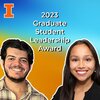
Luis David Gaytán-Soto, recipient of the 2023 Graduate Student Leadership Award
Congratulations to Luis Gaytán Soto, awarded the 2023 Graduate Student Leadership Award.
Silvina Montrul named as recipient of a Marjorie Roberts Professorship
Prof. Silvina Montrul has been named a recipient of a Marjorie Roberts Professorship in Liberal Arts & Sciences. These prestigious named professorships are granted based on an outstanding record of scholarship.
MEXICAN NATIONAL CINEMA
This course explores how cinema in Mexico, from its arrival at end of the 19th century through 21st century production, has commented on and participated in constructing national identity. We will analyze canonical, landmark films as well as lesser-known works to explore how cinema engages the country’s national imaginary while negotiating notions of class, gender, race and modernity informed by transnational and global connections. As film is an “industrial” art form, we will examine the significance of social, historical and political conditions in addition to global economic structures in...
SPANISH IN THE UNITED STATES
Did you know that the United States has over 50 million Spanish-speakers, making it the second largest Spanish-speaking population in the world, after Mexico? In this course, we will explore the past, present, and future of the many different Spanish-speaking communities in the U.S. The main objective is to develop critical and linguistic awareness of the relationship between language, individual, and society. We will accomplish this through an examination of historical migration patterns and settlements, dialects of Spanish in the different regions of the U.S., the linguistic characteristics...
REVOLUTIONS & SOCIAL MOVEMENTS THROUGH LAT AM AND IBERIAN DOC FILM
This course explores Latin American and Spanish documentary film in relation to revolutionary and social movements from the 1930s until today. Documentary is seen as a genre that has an “immediate” relationship with reality and history. The course challenges such definitions of what constitutes a documentary and what measure of fiction the genre carries within itself, to show that documentary films do not simply represent reality, but also mediate and actively construct it. Special focus is placed on understanding the role of the Latin American and Spanish documentary as a tool for social...
GETTING REEL: FICTION CINEMA IN LATIN AMERICA
When Mexican director Guillermo del Toro won the Academy Award for best picture, director and animated feature for Pinocchio (2023), it came as no surprise given the explosive trajectory and growing visibility of contemporary Latin American filmmakers. This exciting course explores some of the most significant films to emerge from Latin America and Spain since 2,000. In fact, the cinema of Latin America and Spain has become increasingly globalized, and all of the films we study have achieved important commercial and critical success internationally; this begs the question, why...
SOMOS SUR: IDENTITY AND ETHNICITY IN LATIN AMERICAN LITERATURE AND CULTURE
In her song “Somos Sur,” Chilean singer Ana Tijoux reimagines the possibilities of solidarity and collaboration among people in Latin America and around the so-called Global South. By giving voice to those unrepresented communities in el Sur, she proposes creating resistance against injustice and discrimination in the region. Such as Tijoux, many Latin American writers and scholars have constantly rethought living in Lationamérica, understanding the cultural differences between Europe and the US, and providing strategies against oppression and political repression in their own countries. This...
WHY WE EAT WHAT WE EAT? FOOD AND CULTURE IN LATIN AMERICA
This course examines the relationship between food, culture and society in colonial Latin America and its impact on our society today. Why we eat what we eat is a product of the encounters between these diverse societies (European, Indigenous and African) in the past and the result of subsequent centuries of social interactions. Our aim is to read culture through food to better understand its impact on the articulation of social hierarchies, identity constructions, cultural distinction, and power. We will discuss a variety of written and visual texts from the colonial period (15th to...
STRANGE WORLDS
On the fantastic, speculative, and futuristic in Spain’s literature from the 18th C-present.
T/TH 2:00-3:20 pm
CRN 53119
Pre-req: Span 228
Instructor: Prof. Anna Torres-Cacoullos
Course image credit: “Moonchild” by Santiago Caruso
SPANISH IN THE COMMUNITY
Learn about and from Latinx immigrants living and working in Champaign-Urbana. As you learn about their strengths and challenges, you will see how their realities reflect larger issues of immigration on a global, national and regional scale. You will hear directly from local Latinx leaders and people who stand alongside them, working toward immigrant justice.
Students should plan to dedicate 20 hours to volunteering in the community in addition to class time.
*SPAN 232 fulfills the US Minority cultures gen ed requirement. The course is taught in Spanish; anyone who grew up speaking Spanish...