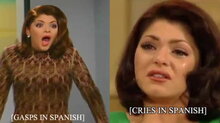
This course explores the social and political history of melodrama in Latin America. We will discuss the role melodrama has had within Latin American media following a long-term chronological approach that begins with nineteenth-century serialized novels (folletín) and ends with recent telenovelas from Colombia, Mexico, and Argentina. As a language of emotions and familiarity, Spanish-speaking melodrama has been a key tool to reflect on the most critical social and political issues, from mid-twentieth-century populisms to globalization, from modernization to the human rights abuses of the 1970s’ dictatorships. The course will address the uses of melodrama in print media, radio, cinema, and television, in order to explore how the melodramatic imagination shaped the experience of modernity in the region and enabled Latin American audiences to deal with issues of class inequality, gender roles, sexuality, national identities, and racism. In Spanish.
Prerequisite: SPAN 228 or consent of instructor.
CRN: 53123
T/TH 11:00 - 12:20 PM; 113 Davenport Hall
Instructor: Rodrigo Viqueira